
How Mushrooms Became the Moment
A look at fungi’s role in beauty, wellness, and long-term health—and how it aligns with the way we think about care today
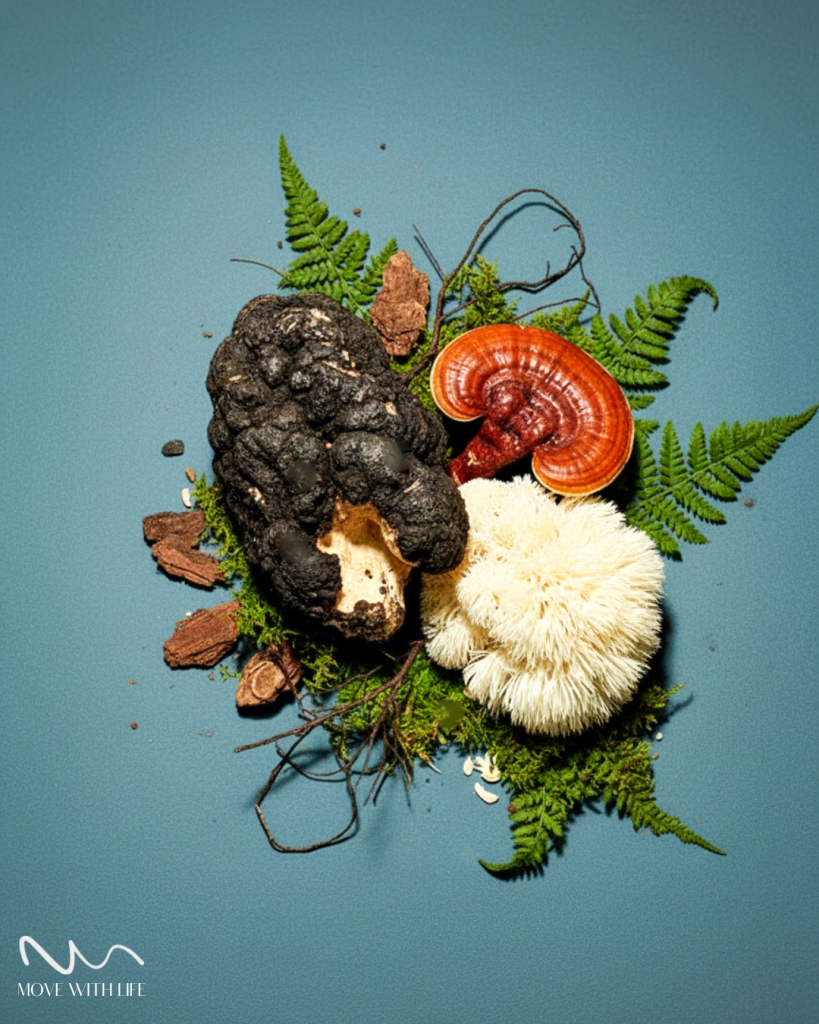
Mushrooms have a way of resisting simplification. They are neither plant nor animal. They don’t behave like crops, and they don’t act like pharmaceuticals. They don’t lend themselves easily to single-claim marketing or overnight transformation stories. And yet, they’ve become quietly foundational to some of the most thoughtful shifts happening in wellness and beauty today.
This isn’t because mushrooms are new, rare, or exotic. It’s because fungi operate according to a different biological logic—one that happens to align closely with how we are now learning to think about skin health, systemic resilience, cognition, and long-term vitality.
To understand why mushrooms feel so relevant now, it helps to start with what fungi actually are.
Fungi as systems, not ingredients
What we commonly call a mushroom is only the visible reproductive structure of a much larger organism. The majority of fungal life exists as mycelium—a vast, branching network of microscopic filaments that lives underground or within organic matter. Mycelium breaks down complex materials, redistributes nutrients, and connects ecosystems at scale.
Biologically, fungi are specialists in transformation. They don’t simply grow by accumulating resources the way plants do; they decompose, reorganize, and repurpose what already exists. That process requires an unusual biochemical toolkit: enzymes capable of breaking down lignin and cellulose, structural polysaccharides that retain water and maintain integrity, and signaling compounds that allow fungi to respond to environmental stress.
When mushrooms are used in human applications—whether topical or ingestible—it’s this biochemical profile that matters. Polysaccharides, beta-glucans, phenolic compounds, sterols, and fermentation-friendly substrates are what give fungi their relevance in modern formulations. These are not cosmetic add-ons; they are functional components that interact with biological systems in specific ways.
This systems-based behavior is part of what distinguishes mushrooms from many plant ingredients commonly used in beauty and wellness. Plants photosynthesize and store energy. Fungi regulate environments.
A long-standing relationship with human health
Human cultures recognized the value of fungi long before modern chemistry could explain them. In East Asian medical traditions, mushrooms like reishi (Ganoderma lucidum), cordyceps, chaga, and tremella (snow mushroom) were classified not as acute medicines, but as tonics—substances used consistently to support balance, recovery, and longevity.
Reishi, often referred to historically as lingzhi, held a particularly elevated status. It was associated with vitality and equilibrium and was often reserved for elites due to its scarcity. Tremella, meanwhile, has a documented history of use tied to skin appearance and softness, particularly among women of status. Cordyceps developed a reputation around endurance and physical resilience, while chaga became associated with daily fortification rather than targeted intervention.
What’s important here is not mythology, but framing. These mushrooms were not used to “fix” isolated problems. They were used to support systems—immune resilience, recovery capacity, vitality over time.
That distinction maps closely to how thoughtful wellness is being reframed today.
Why mushrooms re-emerged now
The current mushroom renaissance didn’t happen by accident. It reflects a convergence of biological suitability and cultural need.
Fatigue as a defining condition
Modern life is defined by overstimulation and depletion. Cognitive load is high. Recovery windows are short. Nervous systems are taxed not by scarcity, but by excess—information, light, noise, demand.
Mushrooms appeal in this context because they are not framed as stimulants. They are framed as supportive regulators. This is why mushrooms like lion’s mane became popular not as “brain hacks,” but as ingredients associated with steadier focus and cognitive maintenance rather than spikes.
The cultural shift away from aggressive optimization toward sustainable performance created space for fungi to re-enter the conversation.
Barrier thinking across systems
In skincare, the last several years have shifted focus from exfoliation and correction toward barrier integrity. Skin is increasingly understood as a dynamic interface—one that requires structure, water retention, lipid balance, and calm signaling.
This is where mushrooms, particularly tremella, became newly relevant. Tremella polysaccharides form flexible, water-binding matrices that sit comfortably on the skin. Rather than penetrating aggressively, they support hydration by maintaining a moist environment and reducing transepidermal water loss. The appeal is not drama, but durability.
That same logic extends beyond skin. Gut integrity, immune signaling, and even psychological resilience are now discussed in terms of barriers and interfaces. Mushrooms fit naturally into that systems language.
A recalibration after peak biohacking
The early 2010s wellness boom favored intensity: high-dose actives, maximal stacks, aggressive protocols. What followed was burnout—both physiological and psychological.
Mushrooms survived that era precisely because they do not lend themselves well to extremism. Their effects are cumulative, contextual, and dependent on quality and formulation. They reward consistency rather than excess.
Sustainability, with caveats
Mycelium-based materials brought fungi into broader cultural awareness, positioning mushrooms as symbols of regenerative design. While the realities of scaling these materials have proven complex, the underlying fascination remains: fungi represent a model of growth that is adaptive rather than extractive.
That philosophy resonates with consumers increasingly skeptical of quick fixes and greenwashed promises.
Understanding the mushrooms themselves
To treat mushrooms as interchangeable is to miss the point. Each species brings distinct chemistry, behavior, and relevance.
Tremella: structural hydration
Tremella fuciformis produces polysaccharides with a high capacity for water retention and barrier fortification. In skincare, this translates into hyaluronic acid-like levels of hydration that feels cushioned rather than sticky, and supportive rather than occlusive.
Unlike many humectants that focus on drawing water into the skin, tremella excels at maintaining a hydrated environment. This structural benefit makes it particularly well-suited for mists and water-based layers, where it can condition the skin with a more long-term focus on moisture.
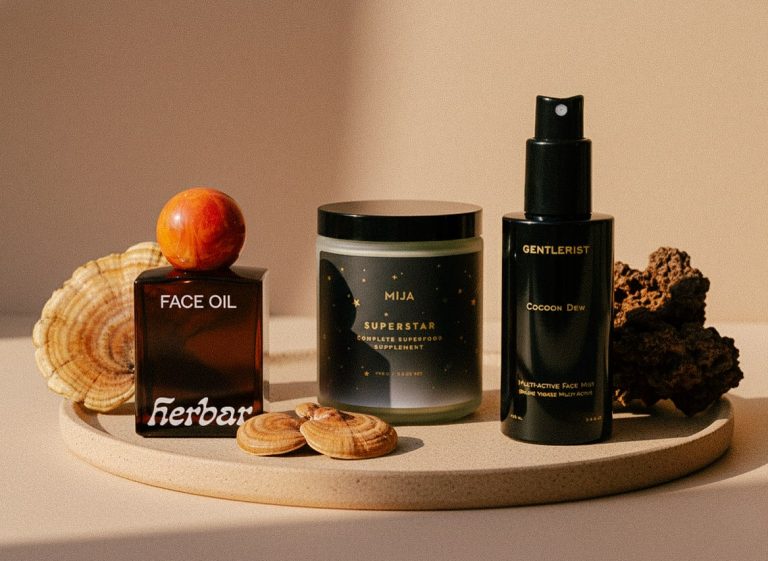
In products like Gentlerist Cocoon Dew, tremella functions as part of the skin’s architecture rather than a single hero claim— working with a plethora of humectants in supporting hydration, comfort, and overall skin quality in a way that is consistent with long-term use.
Reishi: equilibrium and calm
Reishi’s chemistry includes triterpenes, polysaccharides, and sterols that have made it historically associated with balance and restoration. In skincare, it is often positioned for soothing and redness-prone complexions, not because it suppresses inflammation aggressively, but because it supports calm signaling.
In modern formulations, reishi tends to work best as part of a broader system rather than as a standalone solution. Herbar Face Oil integrates reishi into a lipid-rich context with Vitamin E and Hemp Seed Oil, where it supports comfort and recovery in a face oil. Similarly, the Origins Dr. Andrew Weil Mega-Mushroom line uses reishi as a cornerstone ingredient, pairing it with fermented chaga and, in some formulations, cordyceps to create products aimed at skin resilience and establishing a better baseline.
Origins is a notable case study because it was one of the first mainstream beauty brands to normalize mushrooms in prestige skincare at scale. Long before “barrier repair” became ubiquitous language, Mega-Mushroom framed fungi as a credible foundation for calm, supportive skincare.
Chaga: daily immunity resilience
Chaga is often discussed for its antioxidant content, but its more meaningful role in wellness is as a daily fortifier for the immune system. Traditionally consumed as a tea or tonic, chaga was not reserved for moments of illness, but integrated into routines meant to support long-term vitality.
This framing carries through in modern ingestibles like MIJA Superstar, where chaga is included as part of a broader nutritional matrix rather than isolated as a single-claim ingredient. The emphasis is on systems support—energy, recovery, overall wellness—rather than targeted immune intervention.
Lion’s mane: cognition without overstimulation
Lion’s mane gained traction alongside the rise of cognitive wellness and nootropics, particularly in Western markets. Its appeal lies in its association with mental clarity and focus without stimulant effects.
Products like Moon Juice Brain Dust illustrate how lion’s mane became culturally embedded not as a pill, but as a ritual—something added to coffee or smoothies, integrated into daily life rather than treated as a clinical tool. This matters. The format reinforces the idea of ongoing support rather than acute enhancement.
Cordyceps: adaptation and endurance
Cordyceps occupies a unique place, both historically and culturally. Its reputation for endurance and vitality is well established in traditional medicine, though modern formulations rely on cultivated forms rather than wild-harvested varieties.
In contemporary products, like Pai’s Tri-Mushroom 10 Booster, cordyceps often appears as part of multi-mushroom blends, contributing to a broader narrative of adaptation rather than serving as a singular hero.
From tradition to shelf: how brands translated fungi
What distinguishes successful mushroom-forward brands is not novelty, but translation.
Origins translated mushrooms into credibility, using scientific framing and dermatologist-associated partnerships to bring fungi into mainstream skincare. Moon Juice translated mushrooms into ritual, giving language and lifestyle context to daily use. MIJA translates mushrooms into systems nutrition, embedding them within whole-food matrices rather than isolating them as magic bullets. Gentlerist translates mushrooms into skin architecture, using tremella and reishi not as a trend ingredient but as part of a structural approach to hydration, skin immunity, and barrier care.
These translations matter because mushrooms themselves resist simplistic messaging. Brands that succeed with fungi respect that complexity.
Why mushrooms are unlikely to disappear
Ingredient trends come and go, but mushrooms have characteristics that suggest staying power.
They are biologically relevant to multiple systems. They align with a shift toward maintenance rather than correction. They are compatible with both traditional wisdom and modern formulation science. And perhaps most importantly, they don’t promise shortcuts.
Mushrooms fit a cultural moment that values longevity, genuine care, and quiet efficacy over spectacle.
What mushrooms ultimately teach us
If there is a lesson in fungi’s resurgence, it’s not about superfoods or miracle ingredients. It’s about orientation.
Mushrooms remind us that health is cumulative, that systems matter more than symptoms, and that resilience is built slowly. In beauty and wellness—industries often driven by immediacy—that perspective feels increasingly necessary.
Rather than demanding transformation, fungi offer support. Rather than forcing change, they reinforce structure. After all, they existed in our planetary ecosystem long before most plants, ever grass, came into being. And in a culture learning to value sustainability not just environmentally but biologically, that may be their most important contribution.
Try these Mushroom Favorites
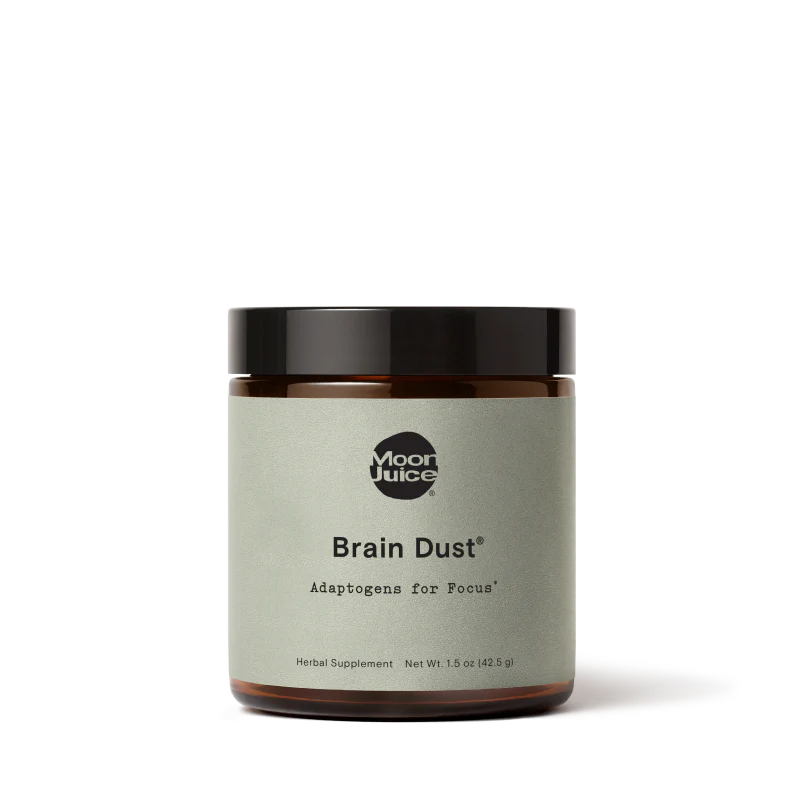
A powder blend anchored by lion’s mane mushroom, Brain Dust reflects how mushrooms entered modern wellness through ritual rather than clinical framing. Lion’s mane has become closely associated with cognitive support, particularly in the context of sustained focus without stimulation. In Brain Dust, it’s paired with complementary botanicals in a format designed to integrate easily into daily routines—coffee, smoothies, or matcha—reinforcing the idea that cognitive care is cumulative, not acute.
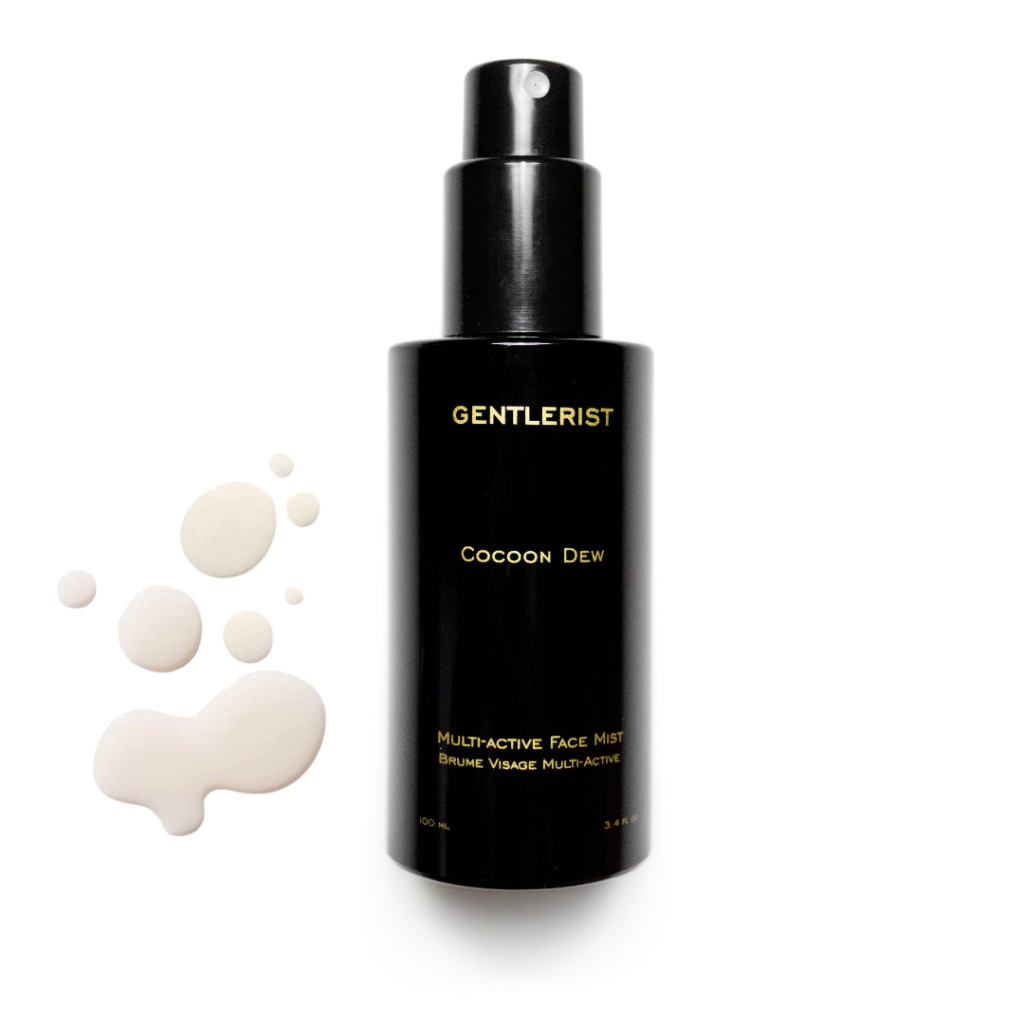
Cocoon Dew showcases how mushrooms function structurally in skincare rather than as headline actives. Formulated with tremella snow mushroom, the mist supports hydration and comfort. Tremella’s polysaccharide profile lends itself especially well to water-based layers, where it contributes a soft, juicy cushioning feel without heaviness. The result is a face mist that aligns with barrier-focused skincare thinking while providing ample hydration.

Superstar positions chaga mushroom within a broader whole-food nutritional matrix, reflecting its traditional use as a daily tonic rather than a targeted intervention. Chaga’s antioxidant profile and immune-support makes it a natural fit for formulas intended to improve overall wellness over time. By integrating chaga alongside organic superfoods in clinically meaningful amounts, Superstar emphasizes systems-level nourishment—an approach that mirrors how mushrooms have historically been used: steadily, regularly, and in service of long-term health.
